
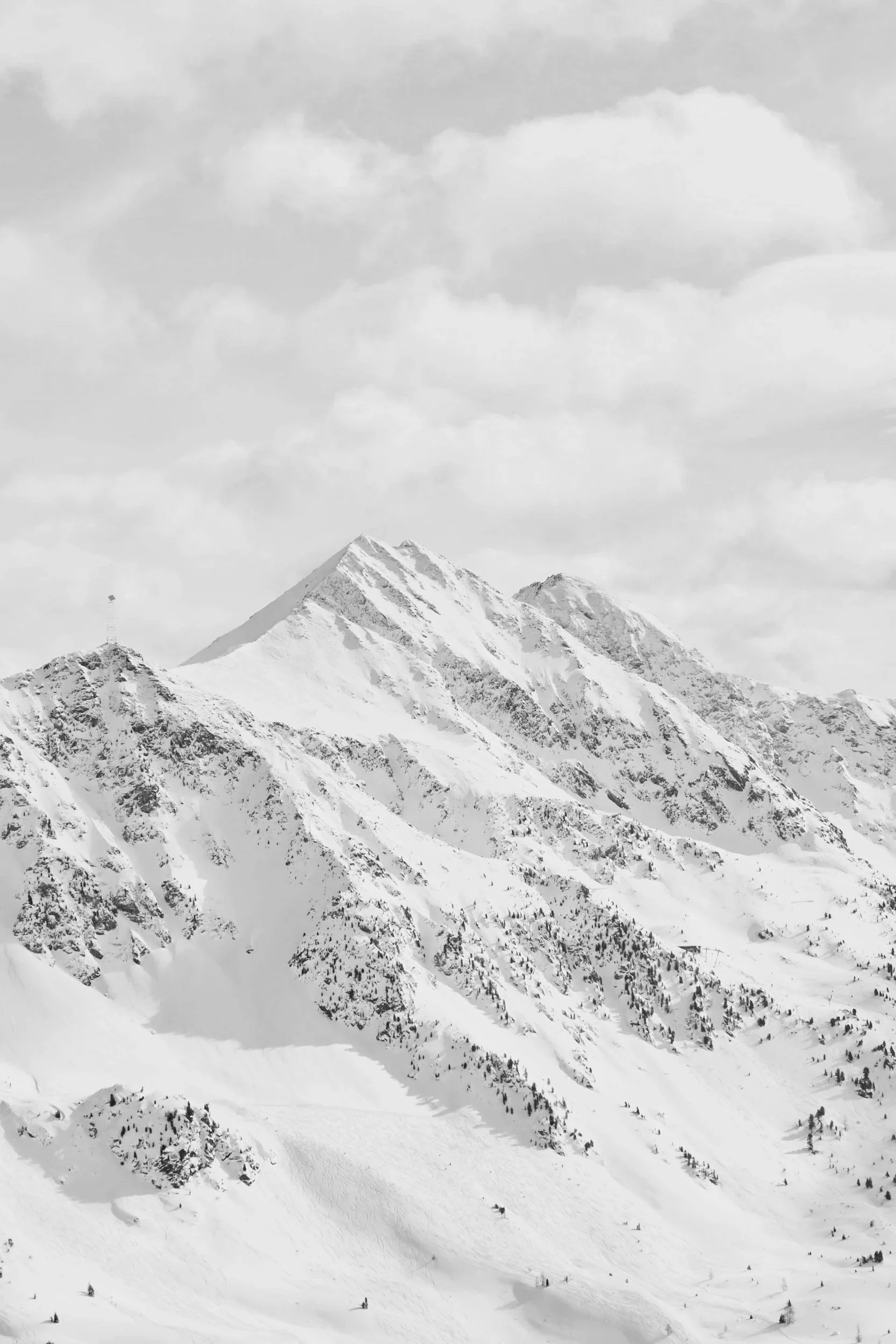
The Problem Isn't Capacity. It's Transfer.
You already know what peak performance feels like on snow. The MTN Performance method helps you rebuild the conditions behind it in your work, with seven principles you already use on the mountain and a simple way to apply them, one week at a time.
Why the Mountain Works
Flow isn't random. It tends to appear when certain conditions are present. The mountain provides all of them at once. Most work environments leave them to chance.
Clear Goals
On a line, you know exactly what you're trying to do. At a desk, you often have to build that clarity yourself.
Immediate Feedback
Every turn tells you something in real time. Most work gives you feedback weeks later, if at all.
Appropriate Challenge
Hard enough to demand your full attention, not so hard that you freeze. The mountain grades this for you.
Full Attention
The terrain does not allow divided attention. Your calendar and inbox usually do.
Real Stakes
Real consequences narrow attention and sharpen judgment. At work, stakes are often abstract and delayed.
Trust in Yourself
Preparation and progression build the trust to act. We help you rebuild it in the places it has worn thin.
The Seven Principles
You already practice all seven on snow, usually without naming them. Together they work as a system, and each comes with practical tools you can start using this week.
Clarity of Purpose
- The Line Sentence: finish "Right now, I'm building..." in plain words
- Abort Points: decide in advance what would make you change course
Progressive Challenge
- Next Appropriate Challenge: one move that stretches you, not the whole plan
- Find Your Level: if you didn't show up for a month, how much would still work?
Mental Toughness
- The Fear Audit: Can I do this? What is the consequence, and how likely? Do I want to? How do I do it?
- Fear vs. danger: separate what you feel from what is actually at risk
Systematic Preparation
- Questions Before You Go: objective, conditions, plan, turnaround, ownership
- The Pre-Mortem, plus 30-, 60-, and 90-day markers for any big move
Flow and Presence
- The Return Loop: notice, don't judge, return
- Protected 90-minute focus blocks, fewer open threads, faster feedback loops
- The Attention Audit
Deliberate Recovery
- Four layers: micro, daily, weekly, and seasonal recovery
- The Recovery Audit: find the layer where you're most under-resourced
Shared Descent
- The Delegation Experiment: one contained handoff in the next 30 days
- The Team Reality Check, and building trust in small steps
The Transfer Gap Assessment
Rate yourself from 1 to 10 on each principle, once for how you operate on the mountain and once for how you operate at work. Most people don't need more information. They need to know which principle is bottlenecking the whole system. That gap is your starting point, and it is the diagnostic work done in coaching.
How the Work Happens
The method works the way progress on snow works: pick one focus, take a few laps, notice what happens, adjust.
Find Your Gap
Rate yourself from 1 to 10 on each principle, once for the mountain and once for work. The biggest gap shows where transfer is breaking down.
Pick One Principle
Choose the principle with the biggest gap, or the one with the most downstream effect on everything else.
Run a One-Week Experiment
Choose one specific practice and run it for a week. One protected focus block a day. One delegated task. One written sentence.
Review and Repeat
Notice what changed and what surprised you. Keep what works, adjust, and choose the next experiment.
What the research does and doesn't say
Flow research suggests that clear goals, immediate feedback, and a balance between challenge and skill make deep focus more likely. We use those findings as the basis for practical experiments, not as a promise of specific results. Every client sets a baseline at the start and tracks their own measures, so you see what changes for you. Individual results vary.
Where the Method Comes From
- Nearly two decades coaching in demanding mountain environments, including more than 15,000 hours of on-mountain instruction.
- Highest-level Canadian snowboard and mountain bike coaching qualifications (CASI, GSMBC, PMBIA Level 4), and Course Conductor for CASI and GSMBC.
- Member of national technical teams that help shape instructor training and assessment standards.
- Certified Performance Neuroscience Coach through the Flow Research Collective.
MTN Performance is an independent coaching practice. Its methods are informed by flow research and by Jake Boling's training in performance neuroscience coaching, and are not operated or endorsed by the Flow Research Collective.
Start With the Book. Or Start a Conversation.
The principles and tools above are laid out in full in Sunday You vs. Monday You. If you'd rather work through them with a coach, book a complimentary 30-minute conversation.
Get the Free Book Talk With Jake